How to Pay Off Your Mortgage Faster

How Can You Pay Off Your Mortgage Faster?

Paying off your mortgage faster comes down to reducing the amount of interest you pay and directing more of your money towards the loan balance sooner.

There are several ways to do this, and the best approach will depend on your loan, cash flow and what else you’re trying to achieve financially.

6 Ways to Pay Off Your Mortgage Faster

1. Make extra repayments

Reduce your loan balance sooner and save interest over time.

2. Use an offset account

Use your savings to reduce the interest charged on your mortgage.

3. Review your interest rate

Make sure you’re not paying more interest than you need to.

4. Same repayments if rates fall

Continue paying the higher amount rather than reducing your repayment.

5. Use lump sums strategically

Consider directing bonuses, tax refunds or other surplus cash towards your loan.

6. Review your loan structure

Make sure your loan features and structure suit how you manage your money.

1. Make Extra Repayments

One of the simplest ways to pay off your mortgage faster is to pay more than the minimum repayment. The additional amount reduces your loan balance sooner, which means less interest is charged over time.

Graph comparing standard mortgage repayments with an extra $500 per month on an $800,000 home loan

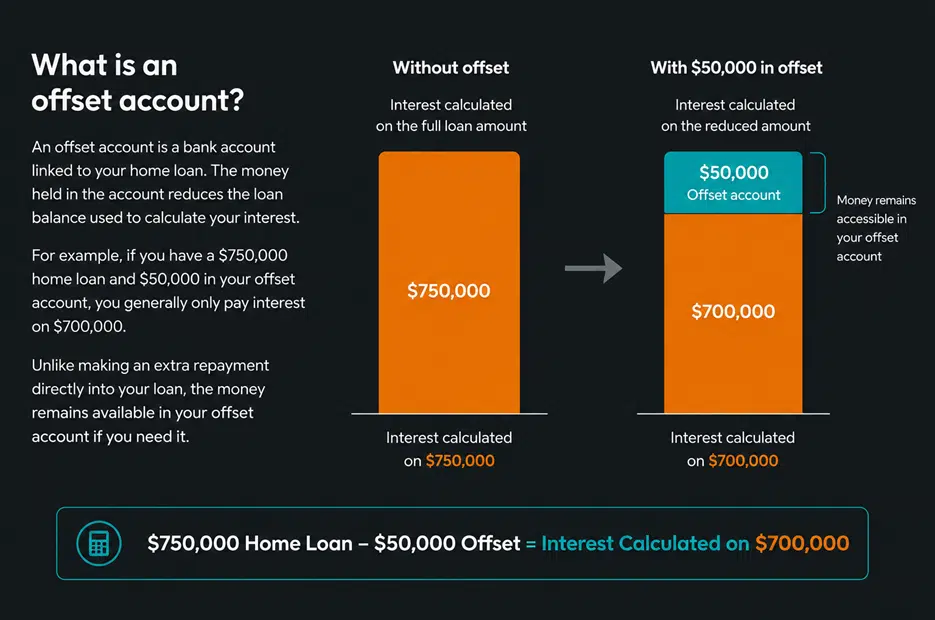
2. Use an Offset Account

An offset account can help reduce the interest charged on your home loan while keeping your savings accessible. The more money you keep in your offset, the less of your home loan is generally used to calculate interest.

3. Review Your Interest Rate

Your interest rate has a direct impact on how much your home loan costs over time. Even a relatively small difference in rate can add up to a significant amount of interest over the life of a mortgage.

Reviewing your rate doesn’t necessarily mean changing lenders. It may simply mean checking whether your existing loan is still competitive and whether your lender can offer you a better rate.

Even 0.50% Can Make a Difference

$800,000 home loan

6.0% interest: approximately

$4,796 per month

5.5% interest: approximately

$4,542 per month

≈ $254 LESS PER MONTH

And if your interest rate falls, keeping your repayments at the previous higher amount could help you pay off your mortgage even faster.

4. Same Repayments if Rates Fall

If interest rates fall, your minimum home loan repayment may also reduce. Rather than automatically reducing what you pay, you could choose to keep making the same repayment.

The difference then goes towards reducing your loan balance faster, helping you pay less interest and potentially repay your mortgage sooner.

Lower rate + same repayment = more going towards your loan

Want to calculate your home loan repayments?

You can also use the Australian Government’s Moneysmart Mortgage Calculator.

5. Use Lump Sums Strategically

Extra money that comes your way can provide an opportunity to reduce your mortgage without changing your regular monthly cash flow.

Tax refunds, work bonuses, inheritances or other one-off amounts could be directed towards your home loan or held in an offset account, potentially reducing the interest you pay over time.

Before spending a lump sum, consider what else that money could achieve.

Paying down your mortgage may be a great option, but depending on your circumstances, you may also want to consider your cash reserves, other debts, superannuation or investment opportunities before committing the money permanently.

6. Review Your Loan Structure

How your home loan is structured can affect how effectively you manage your debt, not just the interest rate you pay.

Features such as offset accounts, redraw facilities and separate loan splits can provide different levels of flexibility depending on how you use your money and what you may want to do in the future.

✓ Is your interest rate still competitive?

✓ Are you making effective use of an offset or redraw facility?

✓ Are your loans structured appropriately for their purpose?

✓ Could refinancing improve your rate, features or overall structure?

A good home loan strategy should consider the bigger picture, not simply how quickly you can repay the debt.

But Should You Always Pay Off Your Mortgage Faster?

Paying off your mortgage sooner can reduce interest and provide the security of becoming debt free earlier. But that doesn’t necessarily mean every spare dollar should always go towards your home loan.

Once you have surplus cash flow, there are several competing ways you could use it. The right choice depends on your goals, timeframe, tax position and how much flexibility you want to maintain.

What Else Could You Do With Surplus Cash Flow?

Pay Down Your Mortgage

Reduce non-deductible debt and save interest.

Build Your Offset

Reduce home loan interest while keeping your money accessible.

Invest

Build wealth outside super for longer-term goals.

Contribute to Super

Build retirement savings and potentially benefit from tax concessions.

Consider Debt Recycling

Gradually replace home loan debt with investment debt where appropriate.


The question isn’t just: “How quickly can I pay off my mortgage?”

It’s: “What is the best use of my surplus cash flow?”

Paying Off Your Mortgage Is Part of the Bigger Picture

Paying off your mortgage faster can be a great financial goal, but your home loan doesn’t exist in isolation.

The right approach should consider your cash flow, other debts, savings, investments, superannuation and longer-term goals. Sometimes the answer will be to put more towards your mortgage. Other times, a combination of strategies may make more sense.

The goal is not simply to become debt free as quickly as possible. It's to make your money work as effectively as possible along the way.

We warmly welcome new clients and our door is always open.

Let us take the stress and hassle out of managing your financial goals so you can focus on the important stuff.

Scroll to Top