Is Debt Recycling Worth It?

Is Debt Recycling Worth It?

If you’ve been researching debt recycling in Australia, you’ve probably come across plenty of articles explaining how the strategy works. The more important question, however, is whether it’s actually worth doing.

For many Australian homeowners, debt recycling can be a highly effective long term wealth creation strategy. When structured correctly, it may help reduce non deductible home loan debt, improve tax efficiency and build an investment portfolio at the same time.

However, debt recycling isn’t the right solution for everyone. Whether it’s worthwhile depends on factors such as your income, mortgage structure, cash flow, investment timeframe, financial goals and willingness to accept investment risk.

This guide will help you understand the potential benefits, the risks to consider, and whether debt recycling may be the right strategy for your own circumstances.

Self-Managed Super Funds - Financial Services - Everyday Wealth

The Short Answer

For the right person, debt recycling can be one of the most effective long term wealth creation strategies available.

Rather than waiting until your home loan is paid off before investing, debt recycling allows you to gradually build an investment portfolio while reducing non deductible debt. This means your investments have more time to grow, while the interest on eligible investment debt may become tax deductible.

For many Australian homeowners, the greatest benefit isn’t simply the tax deduction. It’s the opportunity to start building long term wealth years earlier than they otherwise could.

However, debt recycling isn’t suitable for everyone. The strategy involves investment risk, requires appropriate loan structuring and should only be considered if it aligns with your financial goals, cash flow and risk tolerance.
The real question isn't whether debt recycling works. It's whether the potential benefits outweigh the risks for your circumstances.

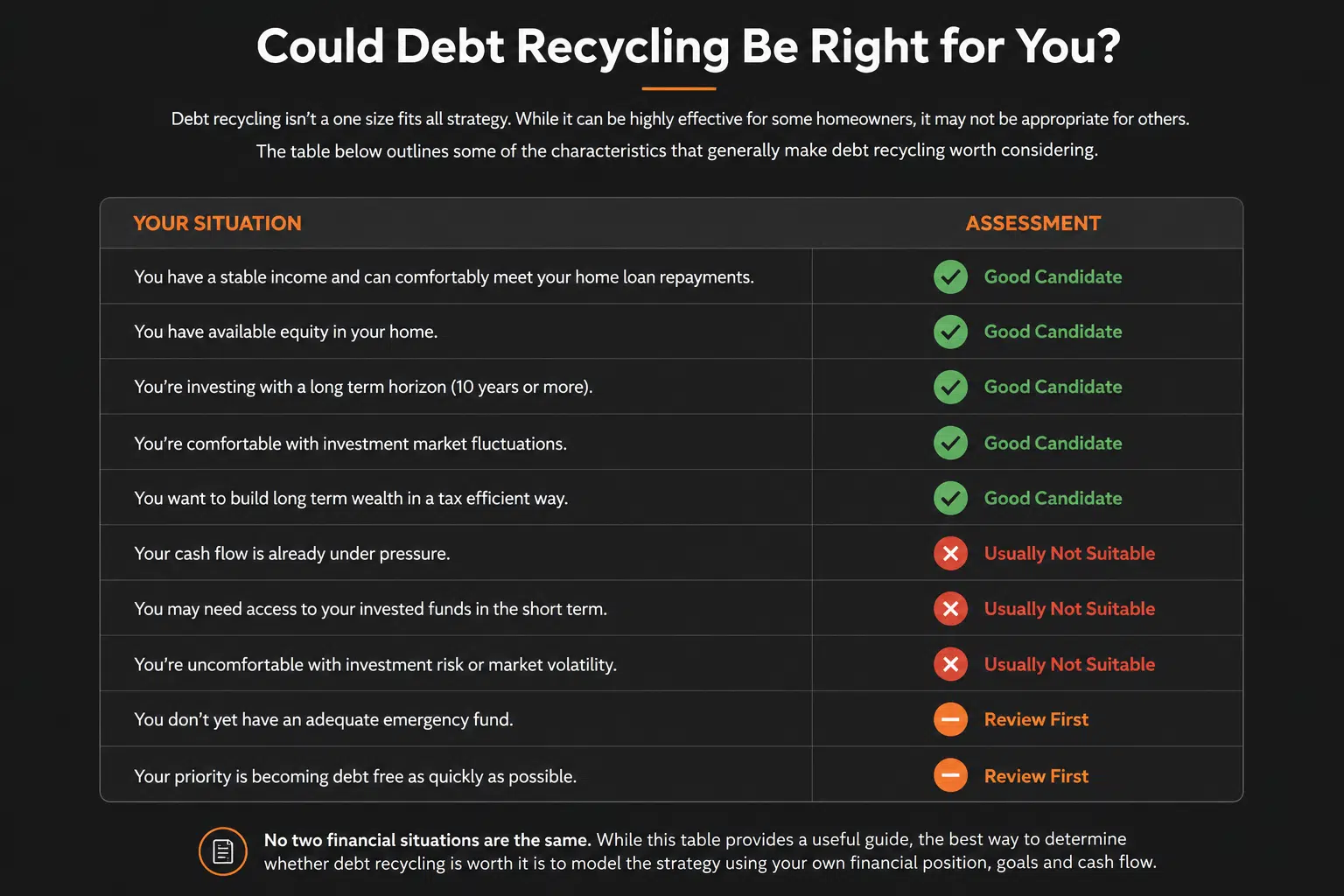
Could Debt Recycling Be Right for You?

Debt recycling isn’t a one-size-fits-all strategy. While it can be highly effective for some homeowners, it may not be appropriate for others.

Every financial situation is different. While this guide highlights some of the factors that influence whether debt recycling may be worthwhile, the best way to know is to model the strategy using your own financial position, cash flow and long term goals.

Why Many Homeowners Choose Debt Recycling

For many homeowners, debt recycling isn’t just about reducing tax.

The real advantage is that it allows you to start building long term wealth while you’re still paying off your home loan.

Instead of waiting years until your mortgage is fully repaid before investing, debt recycling allows your investments more time to compound. Combined with improved tax efficiency, this can have a significant impact over the long term.

Like any investment strategy, there are risks involved and outcomes will depend on market performance, interest rates and your personal circumstances. That’s why modelling the strategy before making a decision is so important.

The Best Way to Know Is to Run the Numbers

No amount of reading can tell you whether debt recycling is worth it for your situation.

The answer depends on your mortgage, cash flow, tax rate, investment timeframe and financial goals.

Our calculator provides a simple illustration of how debt recycling may impact your long term wealth. While it’s not a substitute for personal financial advice, it can help you understand whether the strategy is worth exploring further.

Estimate Your Potential Debt Recycling Benefit

Enter your own details below to see how debt recycling could influence your mortgage, investments and long term wealth.

This calculator provides an illustrative estimate only and should not be relied upon as personal financial advice.

Estimate how gradually converting home loan debt into investment debt may impact your wealth over time.

This assumes the initial investment loan is added to your master limit.
Use your approximate annual principal and interest repayments.
This is a simplified estimate only and is designed to show how a debt recycling strategy may work over time.

Actual outcomes depend on your loan structure, interest rates, repayments, tax position, investment returns, fees, income, borrowing capacity and personal circumstances. This tool does not provide personal financial advice and should not be relied on as a prediction of your actual outcome.

We warmly welcome new clients and our door is always open.

Let us take the stress and hassle out of managing your financial goals so you can focus on the important stuff.

Scroll to Top