Is Debt Recycling Worth It?

Is Debt Recycling Worth It?

Debt recycling can be a powerful strategy, but it is not a one size fits all solution. If you are asking is debt recycling worth it, the answer depends less on the strategy itself and more on how it fits your situation.

On paper, it sounds straightforward. You reduce non deductible debt, build investments, and potentially improve your tax position.

The reality is a bit more nuanced.

The better question is not whether debt recycling works. It is whether it works for your situation.

The Upside of Debt Recycling

Better use of your cash flow

Instead of only paying down your home loan, you are also building an investment portfolio at the same time.

Tax efficiency

Interest on investment debt may be tax deductible, which can improve your after tax position.

Long term wealth creation

You are investing earlier and more consistently, which can make a meaningful difference over time.

Flexibility

Investments built outside of super can be accessed if needed, giving you more control along the way.

The Trade Offs to Consider

Market risk

You are investing borrowed money. That means your investment value will move with markets, both up and down.

Cash flow pressure

Even with tax benefits, the strategy still needs to be funded. This needs to be comfortable, not stretched.

Behavioural risk

Stopping and starting, or reacting to market movements, can reduce the effectiveness of the strategy.

Complexity

Debt recycling relies on getting the structure right from the start. Small mistakes can create bigger issues later.

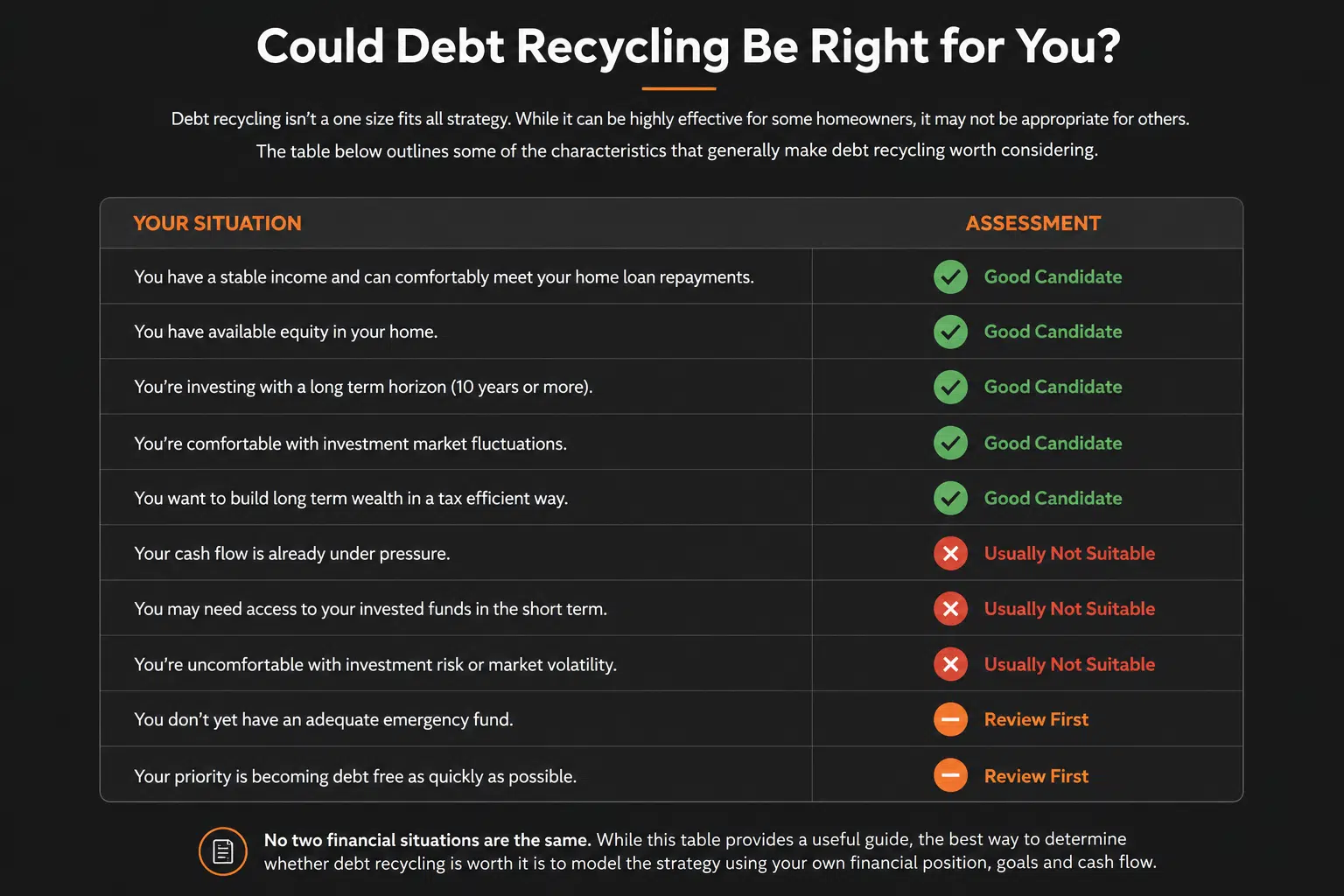
When Debt Recycling May Be Worth It

  • stable income and consistent surplus cash flow
  • a long term mindset
  • comfort with investment risk and market movements
  • a clear and well structured plan

When Debt Recycling May Not Be Suitable

  • tight or uncertain cash flow
  • short term goals or need for liquidity
  • low tolerance for volatility
  • uncertainty around income stability

Understanding How Debt Recycling Works

One of the biggest mistakes we see is trying to implement debt recycling without fully understanding how it works or how it should be structured.

If you are new to the concept, it is worth starting with a simple breakdown first:
Debt Recycling How to Reduce Your Mortgage Faster Using Tax Strategies

If you would like to explore different perspectives on how the strategy is explained, you can also see how institutions like NAB and AMP break it down:

Debt recycling explained
Finance 101: everything you need to know about debt recycling

These provide a helpful overview of the concept, however the key difference is how the strategy is structured and applied to your individual situation.

General Advice Warning

The information above is general in nature and does not take into account your personal objectives, financial situation or needs. Before acting on any strategy, you should consider whether it is appropriate for you and seek personalised advice.

We warmly welcome new clients and our door is always open.

Let us take the stress and hassle out of managing your financial goals so you can focus on the important stuff.

Scroll to Top